

POTS Lines Are Going Away: What’s the Plan Forward for Building Communications?
For years, many commercial buildings have relied on traditional phone lines to support important communication systems. Fire alarm panels, elevator phones, security systems, access control equipment, gates, and other building systems often depended on POTS lines, also known as “plain old telephone service.”
But those lines are becoming harder to maintain, more expensive to keep, and less reliable as carriers move away from legacy copper infrastructure.
For building owners, facility managers, schools, churches, healthcare facilities, and commercial properties, this creates an important question:
What is the plan forward?
POTS Lines Are Not the Future
Traditional copper phone lines were once the standard for many building communication systems. They were familiar, widely available, and commonly used for alarm monitoring and emergency communication.
That is changing.
Across the country, carriers are retiring copper networks, limiting support for old phone lines, raising costs, and moving customers toward newer communication technologies. In some cases, property owners may not realize how many critical systems still depend on these legacy lines until there is a service issue, a failed test, or a notice from the carrier.
Waiting until a line fails is not a good plan.
Why This Matters for Life Safety and Security Systems
Losing a standard phone line may sound like a simple telecom issue, but for many buildings, it can directly affect safety, monitoring, and emergency response.
POTS lines may still be connected to:
- Fire alarm communicators
- Elevator emergency phones
- Security alarm systems
- Access control systems
- Gate entry systems
- Emergency call boxes
- Fax lines
- Building automation equipment
- Remote monitoring equipment
If the communication path is unreliable, disconnected, or unsupported, the system may not be able to send the signals it was designed to send.
That creates risk for the building, the people inside, and the organization responsible for maintaining the system.
The Problem Is Bigger Than Cost
Many property owners first notice the POTS issue because of rising monthly phone bills. A line that used to feel like a minor utility expense may suddenly become a major budget item.
But cost is only one part of the problem.
The bigger concerns are reliability, code compliance, service availability, and long-term support. Older copper lines can become difficult to repair. Service windows may be longer. Replacement parts and carrier support may become limited. In some areas, the carrier may no longer want to support the infrastructure at all.
When a fire alarm, elevator phone, or security system depends on that line, the risk becomes much more serious than a phone bill.
The Plan Forward Starts With an Assessment
The first step is to identify which systems in your building still rely on POTS lines.
Many buildings have more lines than the owner or manager realizes. Some are active. Some are rarely used. Some are connected to critical equipment. Others may no longer be needed.
A proper assessment should answer questions like:
- How many POTS lines are currently active?
- Which systems are connected to each line?
- Are any lines used for fire alarm monitoring?
- Are any lines used for elevator emergency communication?
- Are any lines used for security, access control, or gates?
- Are the current communication paths code compliant?
- Are there better options available?
- What should be replaced first?
Without this information, it is difficult to make a smart plan.
Replacement Options Depend on the System
There is no single replacement that fits every building and every application.
Some systems may be able to use cellular communication. Others may use IP-based communication. Some may require a dedicated commercial communicator that is designed for life safety or emergency use. In some cases, the existing panel or equipment may need to be upgraded so it can communicate properly using modern technology.
The right solution depends on the system, the building, the local authority having jurisdiction, the monitoring requirements, and the level of reliability needed.
That is why it is important to work with a qualified life safety and low voltage provider instead of treating this as a basic phone service change.
Fire Alarm Communication Requires Special Attention
Fire alarm systems should never be moved to a new communication method casually.
These systems are subject to specific requirements for signal transmission, supervision, backup power, monitoring, and documentation. A standard internet phone service or basic VoIP connection may not be appropriate for fire alarm communication.
Before replacing a fire alarm phone line, the system should be reviewed by a qualified provider. The new communication path should be selected, installed, tested, and documented properly.
This protects the building owner and helps ensure the system continues to perform as intended.
Elevator Phones and Emergency Communication Also Matter
Elevator emergency phones are another common POTS-line issue.
These phones must allow someone inside the elevator to reach help during an emergency. If the phone line is disconnected, unreliable, or replaced with the wrong type of service, the building may create a serious safety and compliance problem.
Any replacement plan should include elevator communication lines, emergency phones, and any other systems that provide life safety or emergency communication.
Don’t Wait for a Carrier Notice
Some organizations wait until they receive a notice from the phone company before making a plan. That can create unnecessary pressure.
If a deadline is approaching, the building owner may have to make a quick decision, schedule emergency work, or replace multiple lines at once. If the system needs parts, programming, testing, or approval, the timeline can get tight quickly.
A proactive plan gives you time to assess the building, prioritize critical systems, budget properly, and make the transition in an orderly way.
A Smart Communication Plan Should Include
A good plan for replacing POTS lines should include:
- A full inventory of current phone lines
- Identification of all connected systems
- Priority ranking for life safety and emergency systems
- Review of fire alarm and elevator communication needs
- Recommended replacement technologies
- Testing and documentation
- Coordination with monitoring providers
- Coordination with the authority having jurisdiction when needed
- A phased timeline for replacement
- Ongoing inspection, testing, and service
The goal is not just to remove old phone lines. The goal is to keep the building connected, compliant, and protected.
SIG Can Help You Plan the Transition
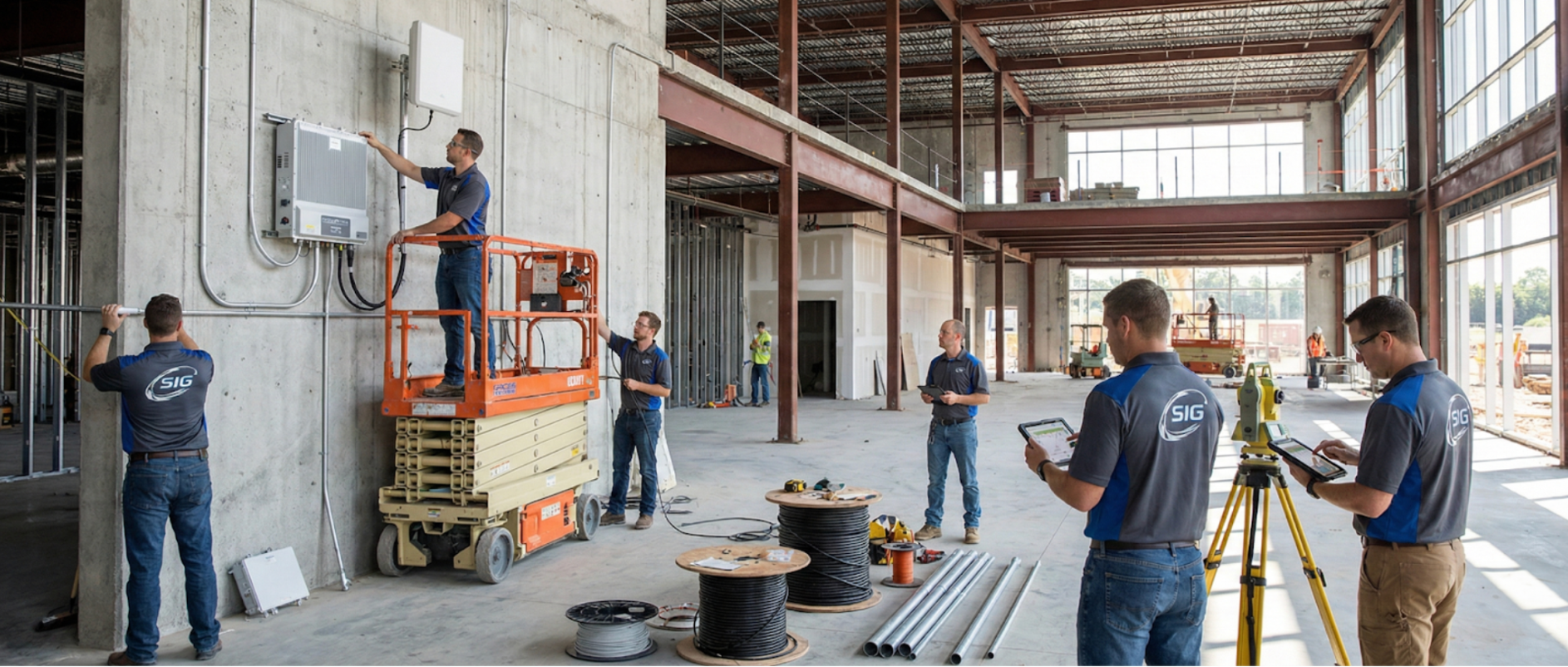
At System Integration Group, we help commercial and institutional clients evaluate, upgrade, and maintain the communication systems that support fire alarm, life safety, security, access control, and building technology.
If your building still depends on POTS lines, now is the time to identify what is connected, what is at risk, and what needs to happen next.
Whether you need to replace fire alarm communication lines, review elevator emergency phones, modernize security communication, or build a long-term plan for your facility, SIG can help you move forward with confidence.
Don’t Lose Communication Before You Have a Plan
POTS lines are going away, but your building still needs reliable communication.
Contact System Integration Group today to schedule a communication assessment and create a plan for replacing legacy phone lines before they become a problem.